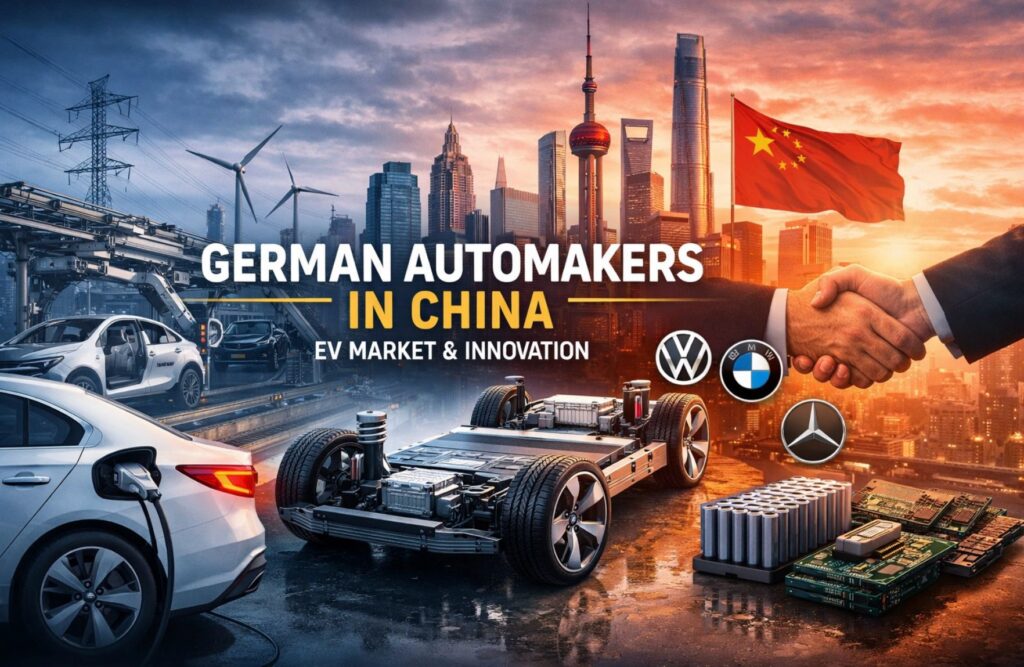
In automotive, Germany’s continued investment in China is often framed as political blindness.
It’s not.
It’s industrial realism.
For German OEMs, China is no longer:
• a low-cost manufacturing base
• or a “growth option”
China is:
• the largest EV market in the world
• the fastest innovation cycle
• the center of gravity for batteries, power electronics, software iteration, and supply chains
The real question for VW, BMW, and Mercedes is not:
👉 “Is China risky?”
but:
👉 “Can we stay competitive in EVs without being deeply embedded in China?”
In the EV era, scale matters more than ever:
• Battery cost curves
• Platform amortization
• Software learning speed
• Supplier ecosystem depth
Walk away from China, and you don’t just lose volume, you lose learning velocity.
This is why German OEMs choose:
• “In China, for China” EV platforms
• Local R&D and software teams
• Partnerships with Chinese battery and tech players
Not because China is easy, but because EV competition is unforgiving.
Many Western automakers still think in ICE-era terms:
• Protect legacy platforms
• Minimize political exposure
• Optimize for near-term margins
German automakers see the risk differently:
In a world where EV standards, costs, and speed are increasingly set in China,
absence is the biggest strategic risk.
You can argue this bet may fail.
You can argue dependence is dangerous.
But from an automotive perspective, the logic is clear:
You don’t learn the EV future by watching it from outside the largest EV market.
That’s why Germany stays, while others hesitate.