As China’s automotive industry enters a phase of deep structural adjustment, Changchun—the historic birthplace of China’s automotive sector and the headquarters of state-owned giant China FAW Group Co. – is aiming to diversify its industrial base. By addressing legacy capacity while aggressively attracting high-growth market entrants, the city is positioning itself for the “15th Five-Year Plan” period.
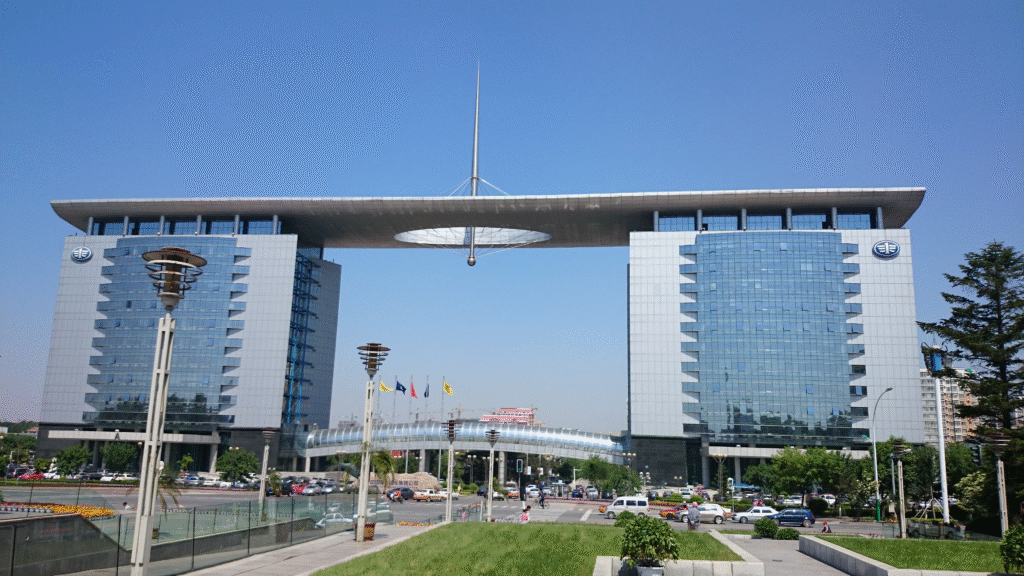
The Changchun Municipal Bureau of Industry and Information Technology recently released the draft “15th Five-Year” Strategic Plan for the Development of the Changchun Automotive Industry (Request for Comments). Marking a rare, candid assessment of localized industrial bottlenecks, the policy document analyzes structural headwinds such as decelerating joint-venture sales and structural pressures in proprietary new-energy vehicle (NEV) transitions. Concurrently, it outlines a systematic blueprint focused on deepening state-owned enterprise (SOE) reforms, introducing multi-tiered manufacturing entities, and pioneering cold-weather EV supply chain ecosystems.
Optimizing Capacity: Navigating Consolidation Wave
The draft plan highlights a market environment defined by structural capacity imbalances and persistent price competition, noting that the broader industry’s net profit margin squeezed to 4.1% – dropping below the national industrial average. Driven by these dynamics, market consolidation is projected to accelerate sharply. The strategic blueprint forecasts that the current field of 71 domestic automotive manufacturing groups in China will contract to roughly 15 players by 2030.
This impending consolidation means that even prominent industry stalwarts must accelerate structural transformations over the next four years to mitigate potential pressures stemming from central government-led strategic restructuring and state resource optimization.
Municipal data disclosed within the report reflects Changchun’s historical exposure to a single large enterprise. For instance, tracking FAW Group’s internal metrics reveals notable structural imbalances:
- The group’s total annual vehicle output adjusted from 3.73 million units in 2020 to 3.31 million units.
- Core vulnerabilities remain tied to legacy portfolios: in 2025, foreign joint-venture brands still constituted an overwhelming 71.5% of FAW’s total sales volume.
- Against a national average NEV penetration rate of 48.1%, FAW’s joint-venture electric vehicle output stood at just 61,000 units – a penetration rate of a mere 2.6% within those ventures. Group-wide, NEV production volume accounted for roughly 13.5% of total sales, indicating a clear need to accelerate electrification timelines.
Industry analysts close to the Jilin State-owned Assets Supervision and Administration Commission (SASAC) and FAW Group note that the municipal government’s palpable sense of urgency is a forward-looking regulatory signal. By integrating proactive policy levers, the local government aims to nudge its core industrial base away from over-reliance on internal combustion engine (ICE) frameworks, leveraging central-local government coordination to secure a strong foothold in the next phase of the global EV transition.
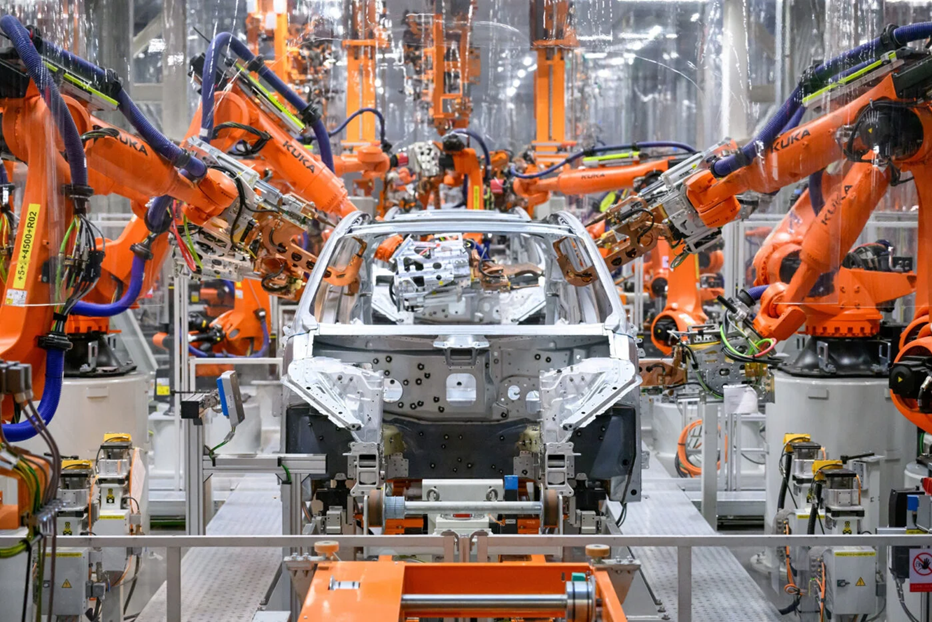
Breaking Single-Enterprise Reliance: Courting High-Growth Contenders
To build a more resilient automotive manufacturing base, Changchun is pivoting away from its long-term dependence on a single industrial anchor and implementing a highly open investment and recruitment strategy.
The blueprint explicitly states an objective to introduce one or more new-energy vehicle manufacturers by 2030. To achieve this, Changchun is actively engaged in strategic dialogues with high-growth EV market leaders, specifically targeting BYD Co. and the automotive arm of tech giant Xiaomi Corp.. The city is pitching to secure northern manufacturing hubs, intelligent R&D centers, or tier-1 critical component supply facilities. Additionally, the plan highlights initiatives to leverage Changchun’s extensive industrial infrastructure to deepen localized supply chain integration and new model rollouts with players like Leapmotor.
“This underscores a shift in Changchun’s economic strategy from an isolated ‘one-city, one-firm’ model to a highly integrated, borderless ecosystem,” a senior expert from the China Association of Automobile Manufacturers (CAAM) noted. “Introducing agile EV upstarts will not dilute FAW’s historical positioning; rather, it introduces a healthy ‘catfish effect’ that elevates the capabilities of the localized tier-1 and tier-2 supplier networks.”
Simultaneously, the municipality is anchoring a premium EV defensive strategy around its legacy joint-venture base. The plan mandates accelerating the capacity ramp-up of the Audi-FAW New Energy vehicle venture – with an eye on launching Phase II construction – by utilizing top-tier premium EV vehicle architectures such as Volkswagen’s CSP and Audi’s PPE platforms to bypass extensive product development cycles and inject immediate high-end EV capacity into the region.
Engineering Solutions for Northern Climates: Constructing a Cold-Weather EV Ecosystem
Addressing the geographic hurdle of northern China’s sub-zero winters – where low temperatures cause accelerated battery degradation and hinder charging infrastructure efficiency – the Changchun blueprint lays out a targeted technical roadmap.
To dissolve the long-standing industry adage that “electric vehicles cannot cross the Shanhai Pass,” the municipal strategy concentrates on dual pillars of intelligent connectivity and specialized thermal/power management:
- Deep Corporate-Tech Integration: The city will fully support FAW in deepening strategic joint ventures with market-leading technology firms, including Huawei, Baidu, iFlytek, and DJI, establishing joint innovation laboratories to tackle cloud-integrated intelligent vehicle architectures and Level 3+ automated driving systems.
- Pioneering Battery Asset Management Models: Plans are underway to collaborate with FAW and global battery leader CATL to establish a localized battery asset management firm. The venture will pilot “vehicle-battery separation and battery banking” frameworks in key low-temperature zones, lowering upfront consumer acquisition costs and alleviating winter range anxiety.
- Standardizing Vehicle-to-Grid (V2G) Deployments: The city supports standardizing V2G capabilities across new models from proprietary brands like Hongqi and Besturn. This will roll out first across municipal public transport, government fleets, and commercial taxi networks, turning the region’s expanding EV fleet into distributed mobile energy storage buffers during harsh winter peaks.
According to the quantitative benchmarks set in the document, Changchun aims to hit an automotive industrial output value of 550 billion yuan (~$76 billion) by 2030, with new-energy vehicles and proprietary domestic brands both targeted to comprise at least 50% of total production. Transitioning from a single state-owned giant to a diversified, multi-player industrial cluster, Changchun’s structural overhaul stands as a critical test case for the high-quality rejuvenation of China’s legacy heavy-industry heartlands.